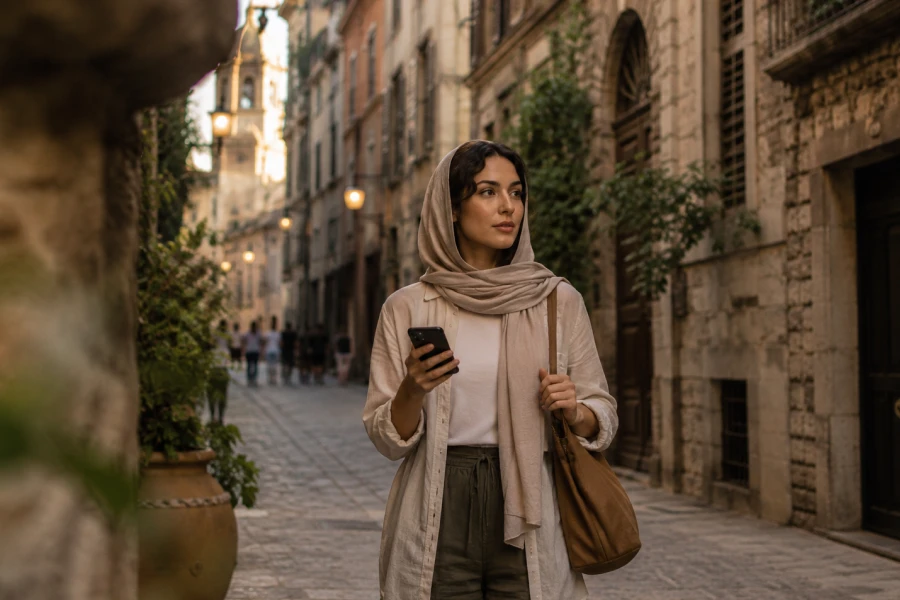
Feeling prepared is different from feeling fearful. Travel safety for women works best when it becomes a series of calm habits rather than a long list of warnings. You do not need to imagine every possible problem before leaving home. You need a few systems that make ordinary choices easier. Good preparation gives you information, backup options, and enough confidence to stay present. It also leaves room for joy, spontaneity, and new experiences. A personal safety routine begins with understanding your own comfort zone. That understanding helps you decide what feels normal and what deserves a pause. Your goal is not perfect control. It is practical awareness that travels well between cities, neighborhoods, and transit days.
Start with information that will help on an ordinary day. Save your accommodation address, emergency contacts, and arrival route in more than one place. Keep a small backup battery and a payment method separate from your main wallet. Tell a trusted person your broad plans without feeling obligated to share every movement. The point is to make help easier to access, not to create constant monitoring. Check local transport patterns before your first late arrival. Learn which ride options, station exits, and nearby landmarks will matter most. A short preparation session can prevent a lot of unnecessary stress later. It also gives you more mental space to enjoy the actual destination. Practical readiness is one of the quietest forms of confidence.
Accommodation shapes your first and last decisions each day. Look beyond the room photos and evaluate the surrounding area, entry system, recent reviews, and route from public transportation. A beautiful room far from everything may create more strain than a simple room in a well-connected neighborhood. Consider how you will arrive at night and where you can get food or water nearby. Choose an option that allows you to settle in without a complicated learning curve. A safe accommodation choices approach focuses on ease, access, and information. It also gives you a more dependable home base. It does not demand luxury or remove all uncertainty. It simply helps you make the first night calmer. That calm affects the rest of the trip more than many travelers expect.
Awareness is easier when your hands and belongings are organized. Keep your phone, transit card, and essential documents in predictable places. Avoid stopping in the middle of crowded pathways to search through every pocket. Step aside, get oriented, and continue with purpose. You do not need to look suspicious of everyone around you. You simply need to notice your surroundings before you become absorbed in a screen. Trust the feeling that tells you to choose a brighter street, a busier carriage, or another café. It may be based on details you have not consciously named. Give yourself permission to change direction without explaining it. Small adjustments are often all that safety requires. Awareness should support your freedom, not shrink it.
Digital choices can either simplify a trip or create unnecessary exposure. Protect your devices with passcodes, keep software updated, and avoid sharing precise real-time locations publicly. Download maps and important reservations before leaving secure Wi-Fi. Use a secure backup for copies of key documents rather than carrying every paper original. A digital travel safety setup can also include a shared itinerary with someone you trust. Choose only the tools you will actually use. Too many apps can create confusion when you are tired. Keep your phone charged, but do not rely on it as your only source of information. A written address and a basic route plan remain helpful backups. Technology works best when it strengthens judgment instead of replacing it.
It is easier to respond clearly when you have already decided what you are comfortable with. Practice simple phrases for declining invitations, ending conversations, or asking staff for help. You do not need a dramatic explanation to leave a situation. A calm no is enough. If someone ignores a boundary, create distance and move toward a public, staffed place. Most travel interactions are friendly and uneventful, but you are allowed to choose which ones continue. Clear boundaries protect your energy as much as your safety. They also make solo travel more enjoyable because you are not constantly negotiating your comfort. Confidence is not loudness. It is trusting your right to make an uncomplicated decision. That skill serves you everywhere, not only abroad.
The safest habits are the ones that become almost invisible. You check your route before departure, keep essentials close, and leave when something feels wrong. Over time, these actions stop feeling like precautions and start feeling like ordinary travel competence. This is important because fear can make every choice feel heavier than it is. Good habits do the opposite. They reduce mental noise so you can focus on a museum, a meal, or a new view. Treat safety as a practical travel skill like budgeting or packing. Review what worked after each trip and refine your own approach. You will become more prepared without becoming more anxious. That is the balance that allows independence to grow.



Leave a comment